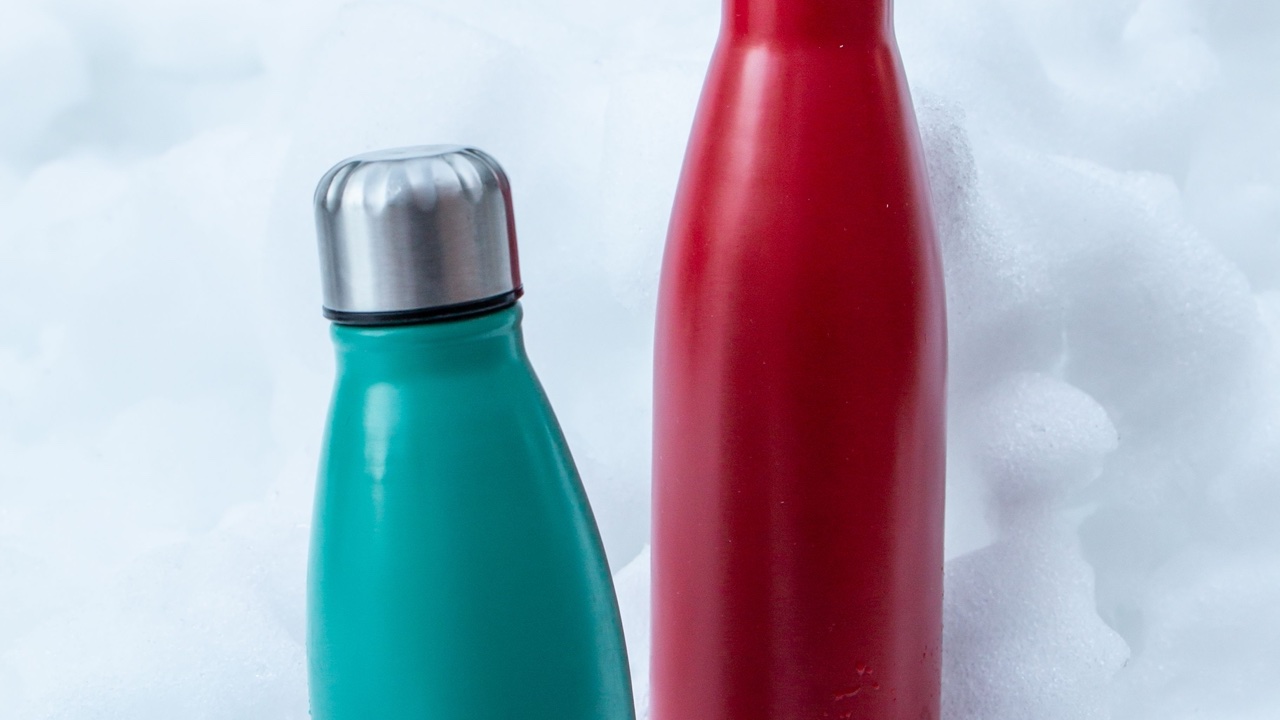
The first time most people order custom tumblers in bulk, they go in focused on two things: the price per unit and whether the logo will look good. Those matter, but they’re not where the real complications show up. The complications show up in the gap between the sample you approved and the units that arrive six weeks later, in the timeline math that almost nobody does correctly, and in the contract terms that seem fine until something goes wrong.
None of this is meant to be discouraging. Ordering custom tumblers at scale is very manageable once you know what to watch for. Here’s what I wish someone had told me before the first order.
The Sample Is Not the Product
This is the most important thing to understand about bulk custom manufacturing. The sample you receive before placing your order is made with care — it’s essentially a sales tool for the supplier, and it’s handled differently from a production run. The person who made your sample knew it was going to be evaluated closely. The people running a production line of 2,000 units are working to throughput targets.
This doesn’t mean the bulk order will be low quality — it means you need to build verification into the process. Before shipment, request a pre-shipment inspection (PSI) or arrange for a third-party inspection service to review the production run. A PSI catches issues like inconsistent powder coat coverage, lid seals that don’t close properly, or laser engraving depth that varies across units — all of which are easier and cheaper to address before the pallet leaves the factory than after it arrives at your warehouse.
If you’re working with a new tumbler supplier for the first time, this step is non-negotiable. With an established supplier you’ve ordered from multiple times successfully, you can calibrate how much pre-shipment verification you need based on your track record.
The Timeline Math Nobody Teaches You
Here’s the timeline that people plan for: “Lead time is four weeks, event is in eight weeks, we’re fine.”
Here’s the timeline that actually happens: artwork revisions take a week and a half. The supplier comes back with a question about the Pantone color match. You go back and forth twice. Production starts two weeks after you expected. The shipment hits a port delay. Customs clearance takes three days instead of one. The tumblers arrive five days before your event, which would be fine except your venue needs everything two days in advance for setup.
The actual timeline you should plan for: add at minimum three weeks to whatever the supplier quotes as lead time, then add another week for your internal distribution process. If your event or campaign has a hard deadline, work backward from that date and set your purchase order date accordingly. Four weeks of quoted lead time usually means eight to ten weeks of real-world lead time for a first-time order.
For repeat orders with a supplier you know, you can tighten this buffer. For new suppliers, new customization techniques, or larger quantities than you’ve ordered before, keep the buffer wide.
MOQ, Inventory, and the Temptation to Over-Order
Minimum order quantities on custom tumblers are typically set between 50 and 500 units depending on the supplier and the level of customization. The economics improve meaningfully as you move up in quantity — the per-unit cost at 500 is often 30 to 40 percent lower than at 100. This creates a temptation to order more than you need to get the better price.
Resist this if you don’t have a clear plan for the extra inventory. Custom tumblers with your specific logo, color, and branding have no secondary market. If you order 500 for an event that needs 200 and then the event format changes, you have 300 branded tumblers taking up warehouse space indefinitely. The unit cost savings evaporate quickly when you factor in storage, handling, and eventual disposal.
Order what you need plus a reasonable buffer for attrition and last-minute additions — typically 10 to 15 percent over your confirmed distribution number. If the minimum order is higher than that, assess whether the economics still work at the minimum. Sometimes they do; sometimes a different supplier with a lower MOQ is the right answer even at a higher per-unit cost.
The Customization Details That Affect More Than Appearance
Every customization choice has downstream implications that aren’t obvious from the design brief.
Powder coat color matching: if your brand has a specific Pantone color, confirm with the supplier whether they can match it and at what tolerance. Most suppliers work in standard powder coat colors and can match common Pantones closely but not exactly. If color accuracy matters for your brand, request a physical color sample before approving the production run.
Laser engraving depth: deeper engraving is more durable but removes more base material, which can affect the insulation layer on thin-walled tumblers. Ask the supplier about their recommended engraving parameters for insulated products specifically.
Lid type and sealing: this is where cheap production shows up most visibly. A lid that doesn’t seal properly or a straw opening that drips is a functional failure that reflects directly on your brand every time someone uses the tumbler. Test the lid on your sample aggressively — fill it, invert it, shake it, test it at different temperatures. What you experience with the sample is roughly what your recipients will experience with their unit.
What the Contract Should Cover
Most custom tumbler orders run on supplier-provided terms, which are written to favor the supplier. A few additions are worth negotiating before you place the order.
First, be explicit about the accepted quality standard and what happens if units don’t meet it. “Meets the approved sample specification” is a starting point; more specific is better — lid seal integrity, logo placement tolerance, surface finish standards.
Second, clarify the defect rate that triggers a remedy and what that remedy is. A standard acceptable quality level (AQL) clause gives you a defined framework: if defects exceed a stated percentage, you’re entitled to replacement, rework, or a credit. Without this, a dispute about a 5% defect rate becomes a negotiation from scratch.
Third, address shipping responsibility. At what point does risk transfer from the supplier to you? If the shipment is damaged in transit, who files the claim? These questions have obvious answers when everything goes right and become genuinely important when something goes wrong.
None of this makes ordering custom tumblers complicated — it makes it predictable. And predictable is what you want when there’s an event deadline and a budget that doesn’t have room for a second order.